Famous People is a name-guessing party game. Everyone joins from their own phone with a four-character code, and the game passes between phones instead of the phone passing between people.
Behind the game sits a private dashboard for curating the names and a marketing site — the kind of thing a small product team would normally build. This was one person working with Claude, in evenings and spare moments, mostly from an iPhone: describing what should change, looking at the result, and deciding what came next.
Three pieces, one product
Play from your own phone
An installable web app. Host starts a game, players scan a QR code, everyone builds a secret list of names, then three rounds run across the group. Whichever phone is live drives the round — so the game survives the host's battery dying.
Curate the deck
Approving names players submit mid-game, writing descriptions, organising categories, bulk edits. The difference between a demo and something you can actually run.
Explain it, collect signups
Explains the game and takes waitlist signups. Those signups write into the same database the game uses, so there's no third system to keep in sync.
The whole game, in pencil
Before any code, every screen existed as an idea — a vision of the experience — captured on these iPhone frames more than 15 years ago. Luckily I'd kept them, and Claude brought the idea back to life.
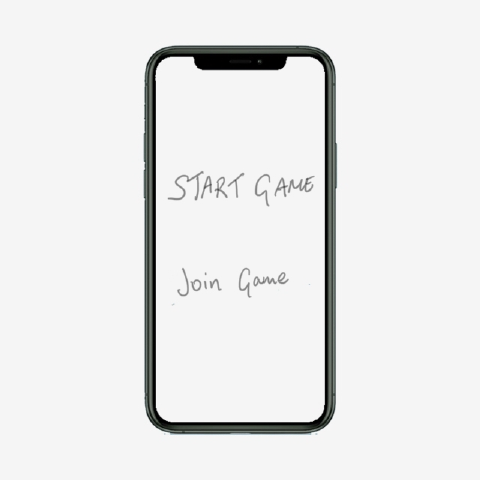
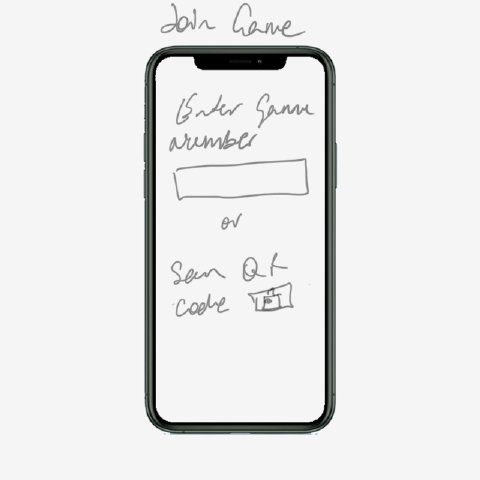
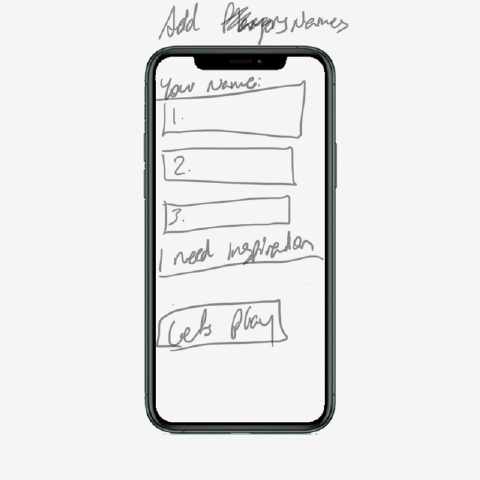
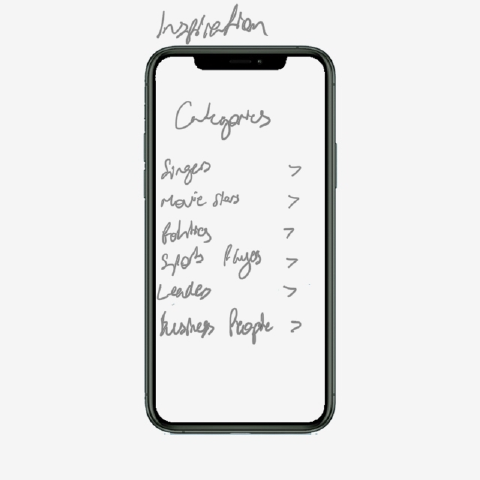
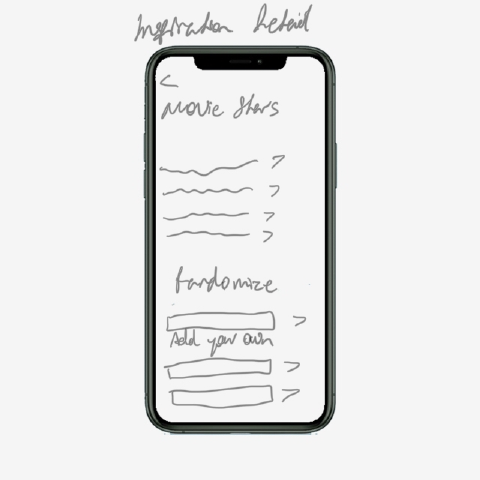
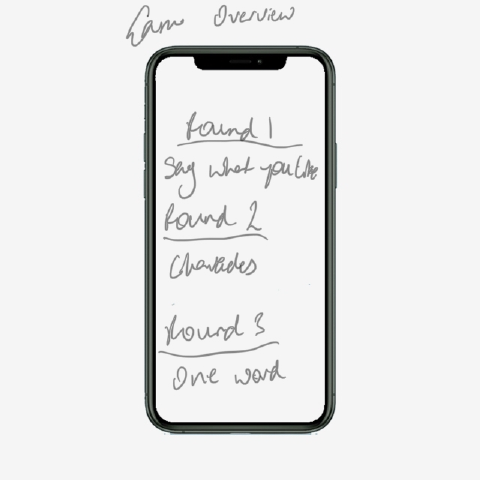
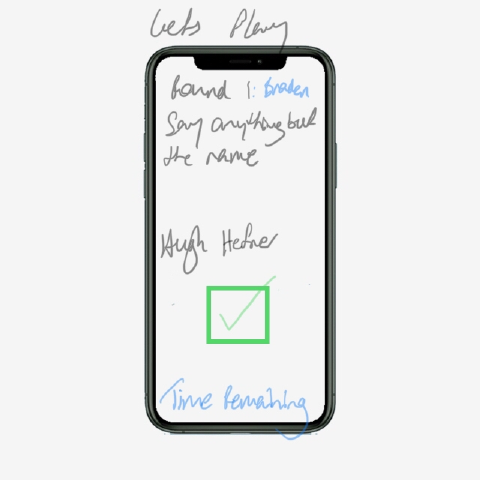
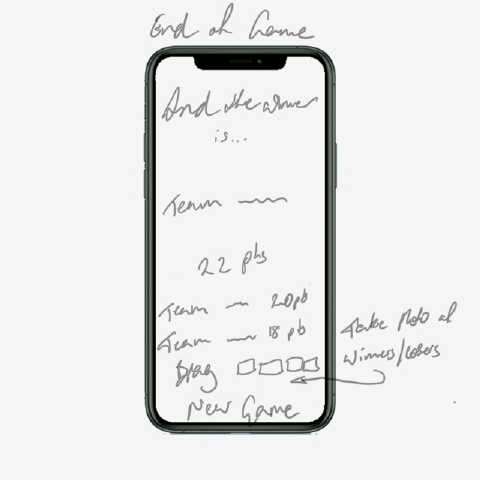
What's striking looking back isn't how rough these are — it's how little the structure changed. The screens that shipped are the screens that were drawn, because the cheapest thing in the world to argue with is a drawing. The photo-of-the-winners note is the exception that makes the point: finding out it wasn't worth building cost one pencil stroke.
Everything that did change came from watching people play. Hiding names someone else already took. Making the current player tap a card before their turn starts, so nobody's turn begins while they're still looking at their phone. Removing a Skip button that turned out to be a way to cheat. None of that is visible in a sketch — you only find it in a living room.
And here's what shipped
The same eight screens, in the same order, running on a phone. Put them next to the drawings and the thing worth noticing is how rarely anything moved.
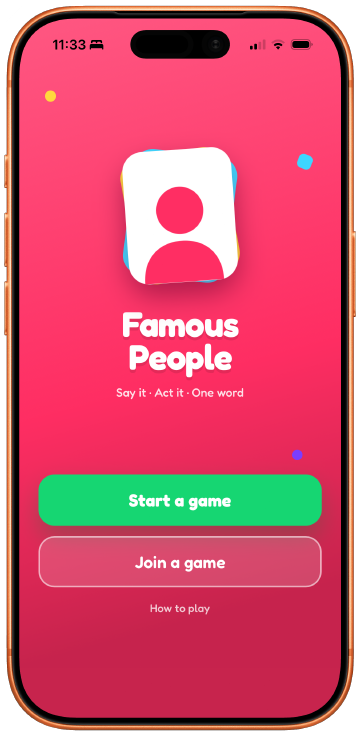
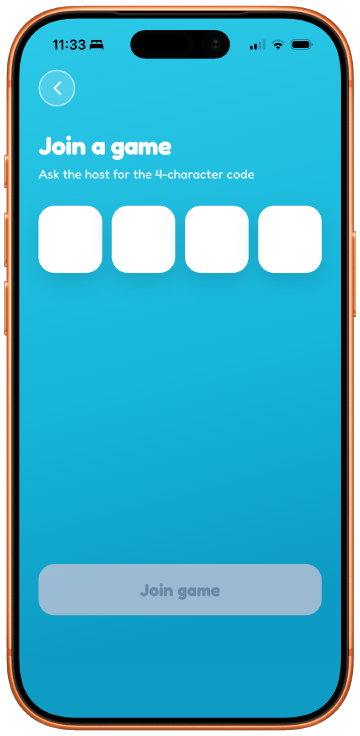
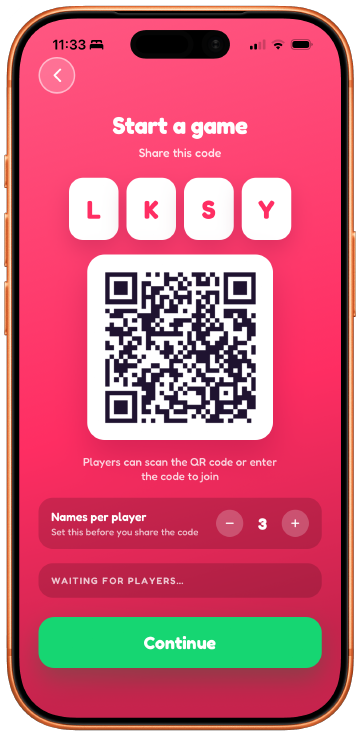
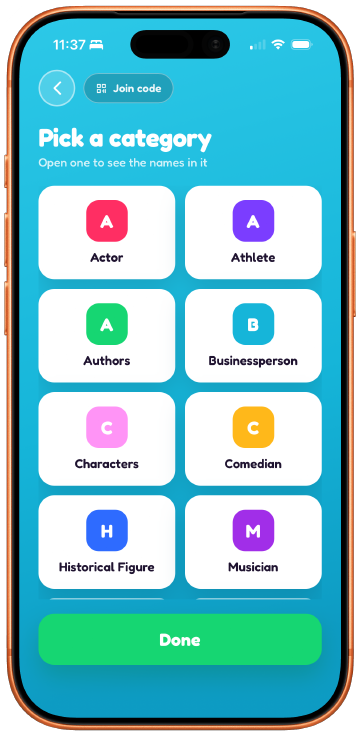
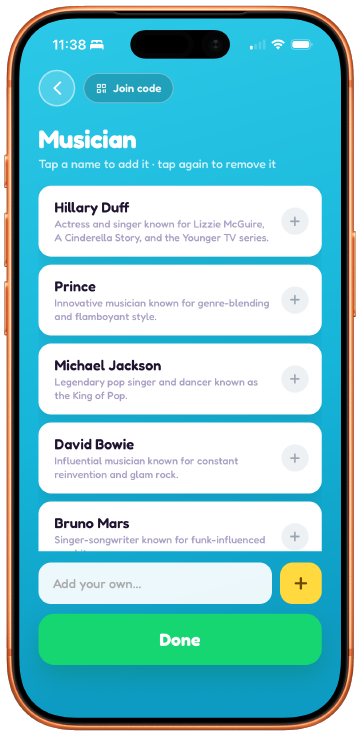
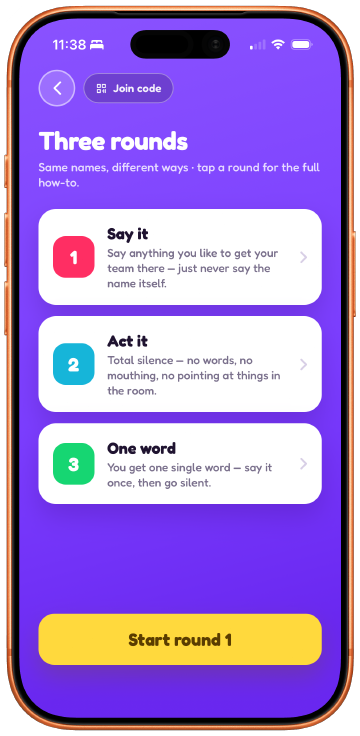
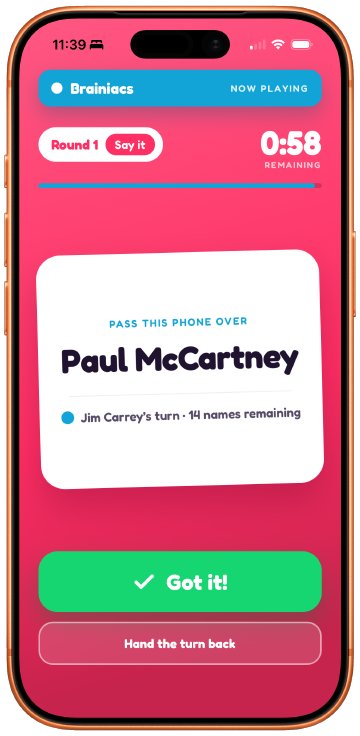
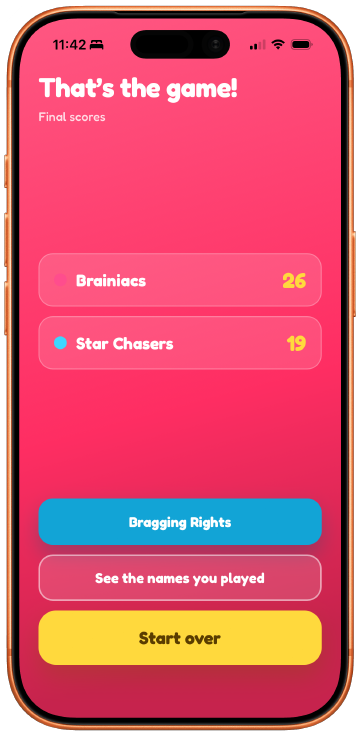
Turning a sketch into a real life application validated ideas. In the sketch, three names written into three boxes and "I need inspiration" was the escape hatch for when a player got stuck. What shipped is the other way round: browsing categories is the main road, and typing your own is the field at the bottom. Nobody decided that in a meeting — it's what happened once real people met a blank text box and stalled.
Two screens here were never drawn at all. Hosting, above — the sketch imagined joining but not the person being joined. And a "who's playing" step that exists for one reason: at a real game night, somebody always turns up without a phone, and the host has to be able to add them.
Building stopped being the bottleneck. Deciding what to build became the whole job.
Three things worth knowing
A prototype can now be the real thing
The gap between a clickable mock and software people can use has narrowed enormously. That changes what's worth arguing about in a room: you can often settle it by building the thing in an evening and watching six people use it.
Watch real people use it
The sketches got the structure right. Everything that made the game good came from watching people play it — where they paused, where they got stuck, what they reached for.
Knowing what to build is the job
With building this cheap, the hard part is deciding what's worth making and being honest about whether it works. That was always the hard part — now there's less in the way of it.
Got something that needs building this way?
Tell us what's stuck. We'll tell you honestly whether we're the right shop for it — and roughly what a first version would take.
Start a project Or see Famous People for yourself